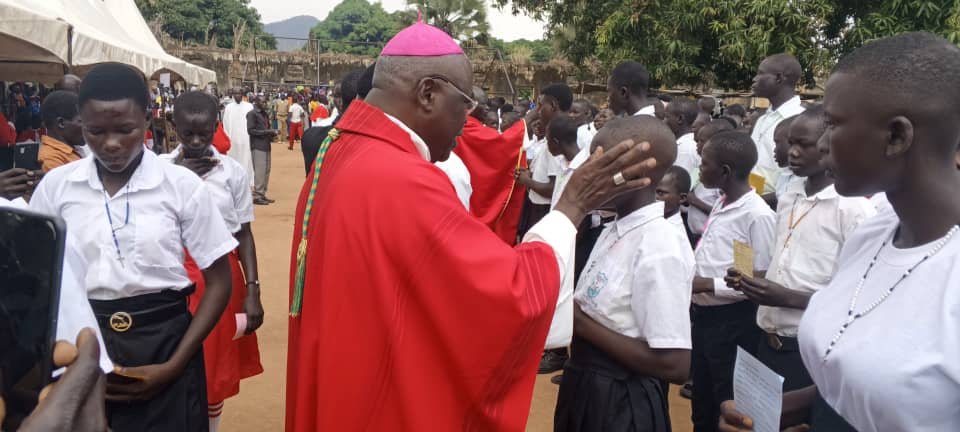
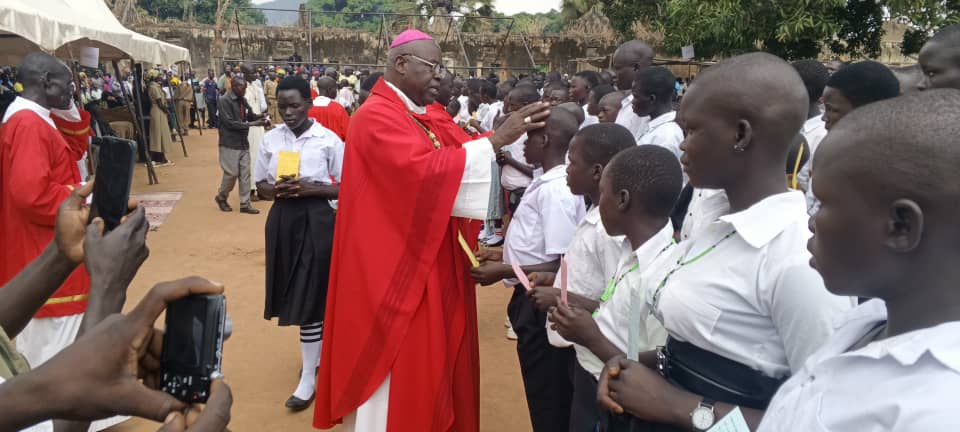
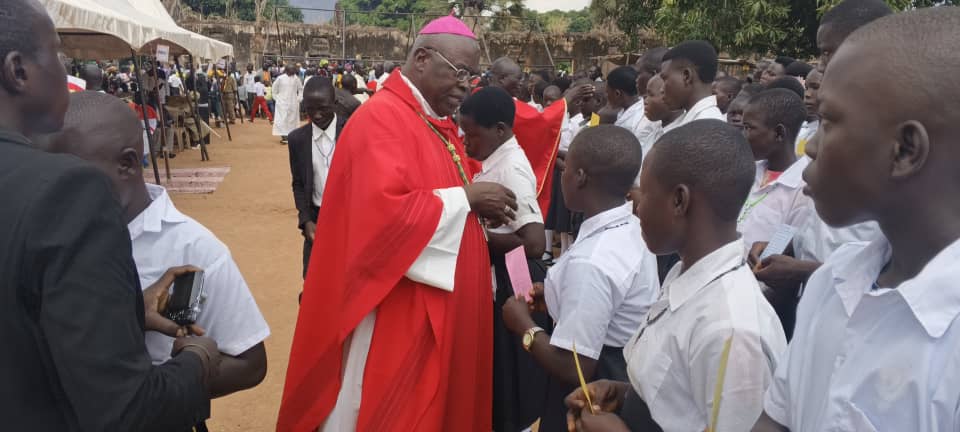
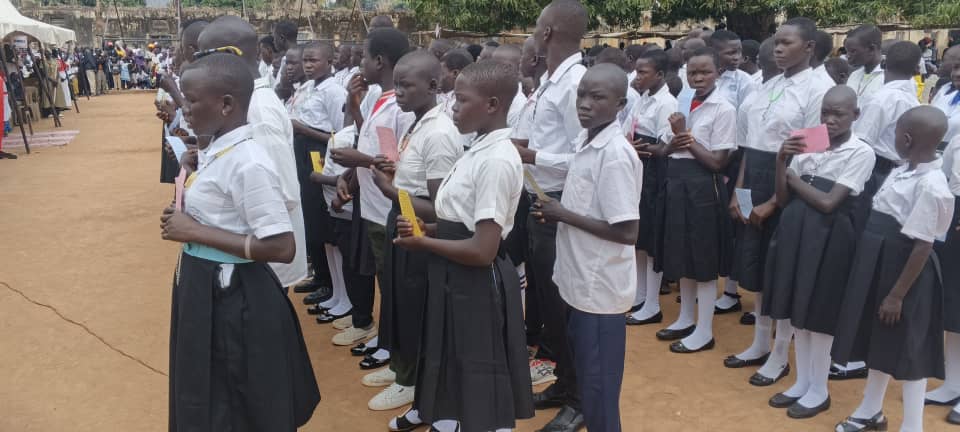
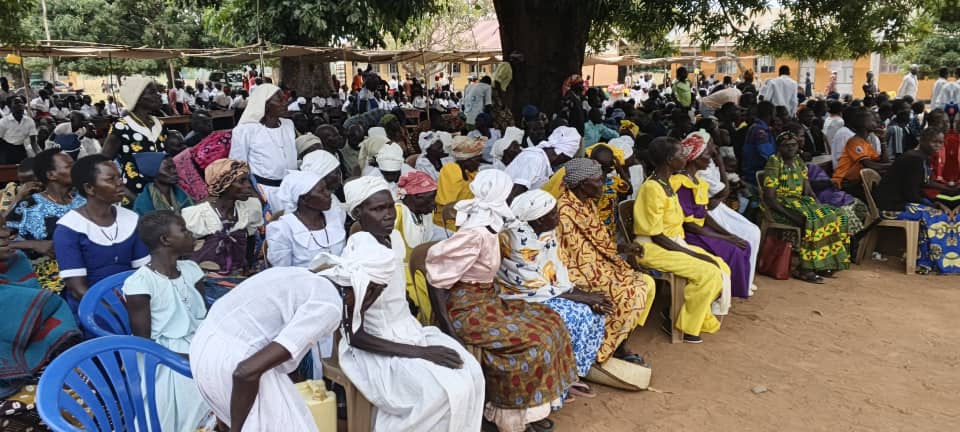
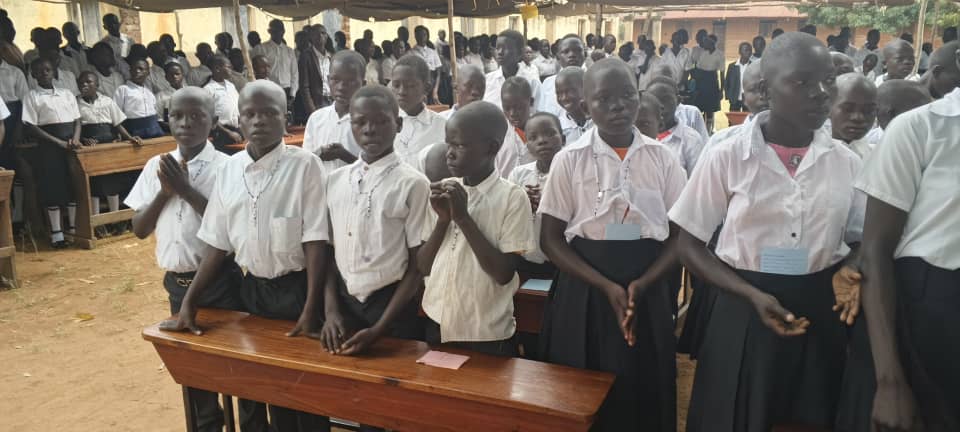
Holy Sacrament of Confirmation for 505 Candidates at Ondidria Chapel, Aripea Parish
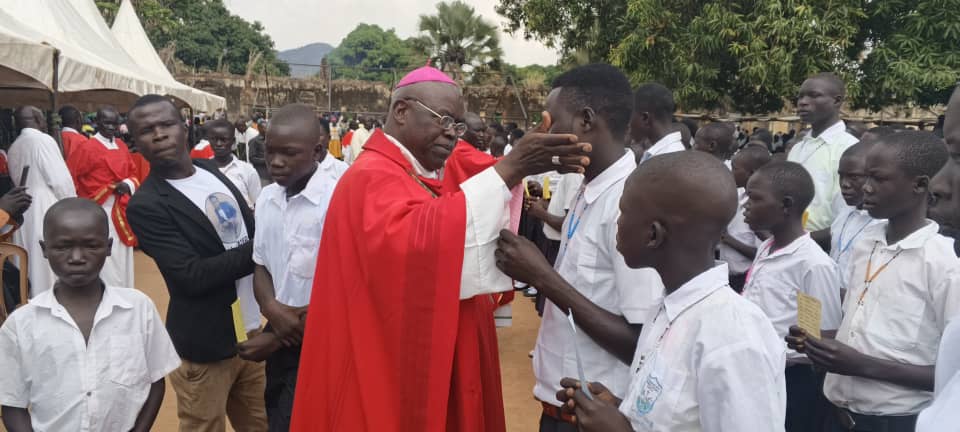
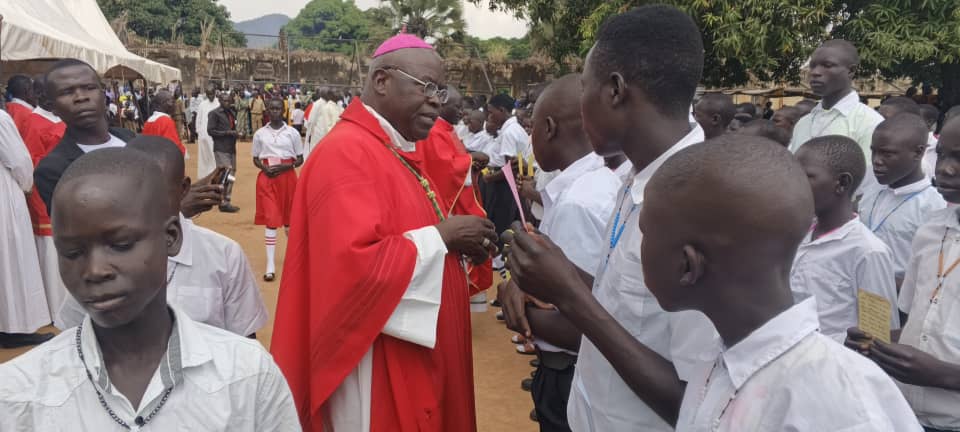
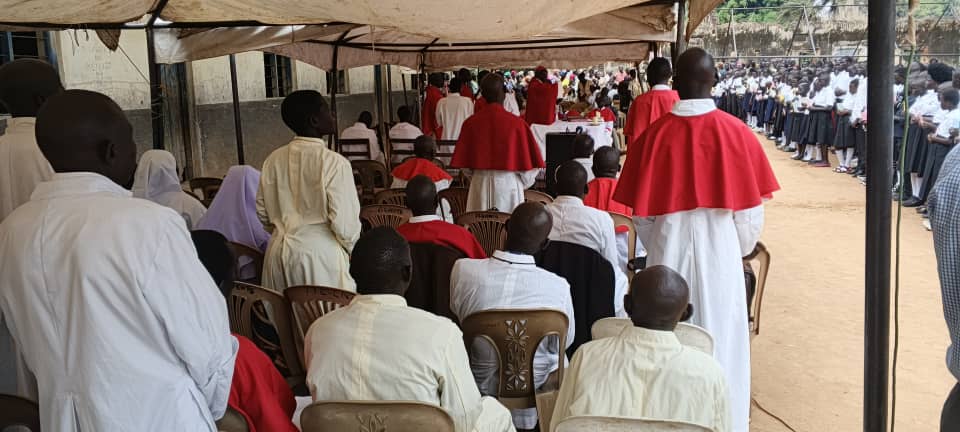
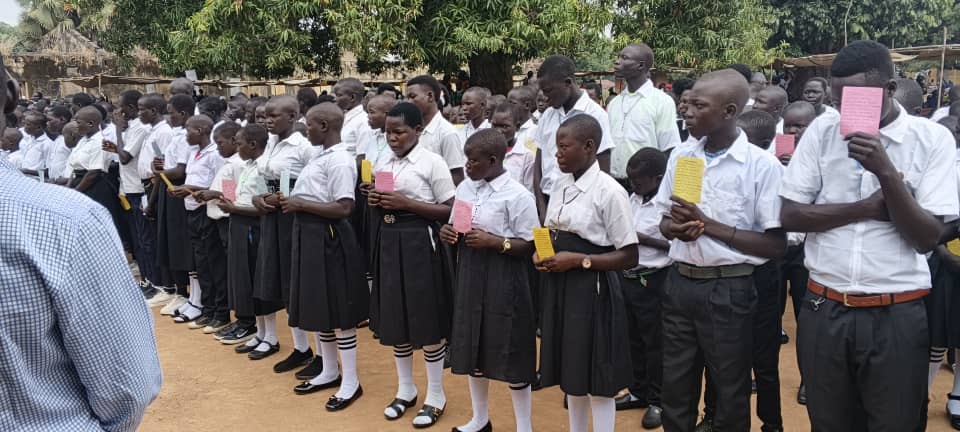
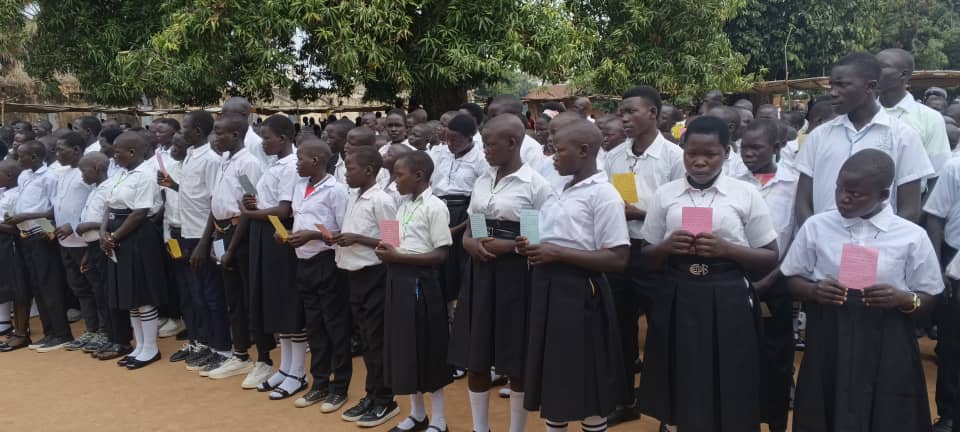
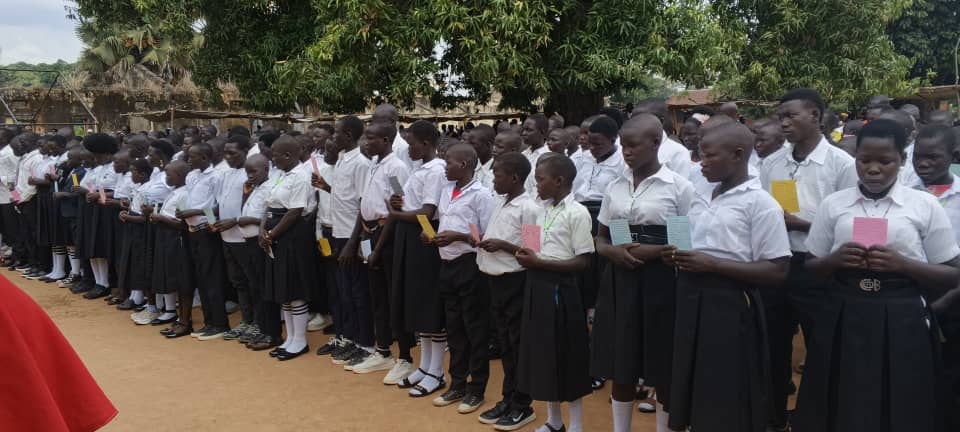
Ondidria Chapel in Aripea Parish hosted a major pastoral celebration as 505 young Christians received the Sacrament of Confirmation.
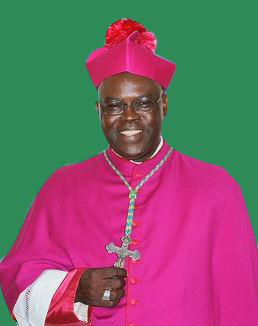
The service, led by the Bishop, Rt. Rev. Sabino Ocan Ocan, drew attendance from the local Catholic community, religious leaders,
central government representatives, and local government officials. In his address, the Bishop urged the newly confirmed to
remain steadfast in their faith and to contribute positively to their communities. He also emphasized the role of the Holy
Spirit in guiding them through the responsibilities of Christian life.
Local parish leaders noted that the large number of candidates reflects growing participation in church activities and continued
commitment to religious instruction across the parish.
The Seven Sacraments of the Roman Catholic church
The Roman Catholic Church has seven holy sacraments that are seen as mystical channels of divine grace, instituted by Christ.
Each is celebrated with a visible rite, which reflects the invisible, spiritual essence of the sacrament. Whereas some sacraments
are received only once, others require active and ongoing participation to foster the "living faith" of the celebrant.
Baptism
Baptism is seen as the sacrament of admission to the faith, bringing sanctifying grace to the person being baptized.
In Catholicism the baptism of infants is the most common form, but unbaptized children or adults who wish to join the
faith must also receive the sacrament. A person is to be baptized only once in their life, and the Catholic Church
recognizes baptisms done by most other Christian denominations as valid. In the rite of baptism holy water is usually
sprinkled or poured on the head by a priest who simultaneously invokes the Trinity with the words, "I baptize you in
the name of the Father, and of the Son, and of the Holy Spirit." The old self is said to die in the waters, and a new
self emerges, mirroring the death and resurrection of Christ. Given that the sacrament is understood as a requirement
for salvation, anyone, even non-baptized persons, can baptize someone as the situation requires.
Eucharist
The Eucharist, or Holy Communion, is another sacrament of initiation and can be received daily if desired. It is the
central rite of Catholic worship. A baptized child's First Communion is usually celebrated around age seven or eight
and is preceded by their first confession (the sacrament of Reconciliation). During the mass the priest consecrates
bread and wine, the elements of the Eucharist, which are transubstantiated into the body and blood of Christ. As a
memorial of Christ's sacrifice on the cross and in a reflection of his Last Supper with his disciples, the congregation
then shares in the sacred meal. Special lay ministers (i.e., non-priests) are trained to bring the consecrated elements
to the ill or otherwise homebound so that all Catholics can participate.
Confirmation
Confirmation is the third sacrament of initiation and serves to "confirm" a baptized person in their faith.
The rite of confirmation can occur as early as age 7 for children who were baptized as infants but is commonly
received around age 13; it is performed immediately after baptism for adult converts. A bishop or priest normally
performs the rite, which includes the laying on of hands in prayer and blessing and the anointing of the forehead
with chrism (holy oil) with the words, "Be sealed with the gifts of the Holy Spirit." In so "sealing" that person
as a member of the church, the outward rite of confirmation signifies the inner presence of the Holy Spirit, who
is believed to provide the strength to live out a life of faith. At confirmation a Catholic may symbolically take
the name of a saint to be his or her patron.
Reconciliation
Also known as Confession or Penance, the sacrament of Reconciliation is seen as an opportunity for renewal and
can be done as often as needed. Some Catholics participate weekly before receiving the Eucharist, whereas others
may seek the sacrament only during the penitential seasons of Lent or Advent. Reconciliation is a means of obtaining
pardon from God for sins for which the sinner is truly remorseful and brings the sinner back into communion with God
and the Church. The sacrament is an opportunity for self-reflection and requires that the person take full responsibility
for his or her sins, both those in thought and in action. During the rite, sins are recounted privately to a priest,
who is seen as a healer aiding the process, and the priest commonly assigns acts of penance, such as specific prayers
or acts of restitution, to complete in the following days. A prayer of contrition is offered at the end of the confession,
and the newly absolved Catholic is urged to refrain from repeating those sins.
Anointing of the Sick
Anointing of the Sick, formerly known as Extreme Unction, is a sacrament that is administered to give strength
and comfort to the ill and to mystically unite their suffering with that of Christ during his Passion and death.
This sacrament can be given to those who are afflicted with serious illness or injury, those who are awaiting surgery,
the weakened elderly, or to ill children who are old enough to understand its significance. A person can receive the
sacrament as many times as needed throughout their life, and a person with a chronic illness might be anointed again
if the disease worsens. The rite can be performed in a home or hospital by a priest, who prays over the person and anoints
their head and hands with chrism (holy oil). The priest may also administer the sacrament of the Eucharist if the person
has been unable to receive it and can hear a confession if so desired. If a person is at the point of death, the priest
also administers a special Apostolic blessing in what is known as the Last Rites.
Marriage
In Catholicism marriage is a sacrament that a baptized man and a baptized woman administer to each other through
their marriage vows and lifelong partnership. Given that to a Catholic sacramental marriage reflects the union of
Christ with the church as his mystical body, marriage is understood to be an indissoluble union. The rite commonly
takes place during a mass, with a priest serving as the minister of the mass and as a witness to the mutual consent
of the couple. The marriage union is used to sanctify both the husband and wife by drawing them into a deeper
understanding of God's love and is intended to be fruitful, with any children to be raised within the teachings
of the church.
Ordination
Ordination, or Holy Orders, is a sacrament that is available only to men who are being ordained as deacons, priests,
or bishops. As with Baptism and Confirmation, the sacrament is said to convey a special indelible "character" on the
soul of the recipient. During the rite, which typically occurs during a special Sunday mass, a prayer and blessing is
offered as a bishop lays his hands on the head of the man being ordained. In the case of the ordination of priests and
bishops, this act confers the sacramental power to ordain (for bishops), baptize, confirm, witness marriages, absolve sins,
and consecrate the Eucharist. Deacons can baptize, witness marriages, preach, and assist during the mass, but they cannot
consecrate the Eucharist or hear confessions. With the exception of married deacons, an order restored by the Second Vatican
Council, all ordained men are to be celibate.
By Melissa Petruzzello, Britannica Editors